
Fiber optic components enable high-performance 2 µm fiber lasers
Thulium-doped fiber lasers operate at a wavelength of approximately two micrometers, making them particularly well-suited for applications where conventional lasers reach their limits. However, commercially available laser sources that simultaneously offer high beam quality, sufficient laser power, and the necessary reliability in quasi-continuous-wave operation at power levels around one kilowatt have been lacking. In the project, LZH scientists developed novel fiber optic components based on triple-clad fibers that enable a reliable and low-maintenance laser architecture. For the implementation of the final laser system, LZH collaborated with Futonics Laser GmbH as well as South Korean partners COSET Inc. and the Korean Photonics Technology Institute.
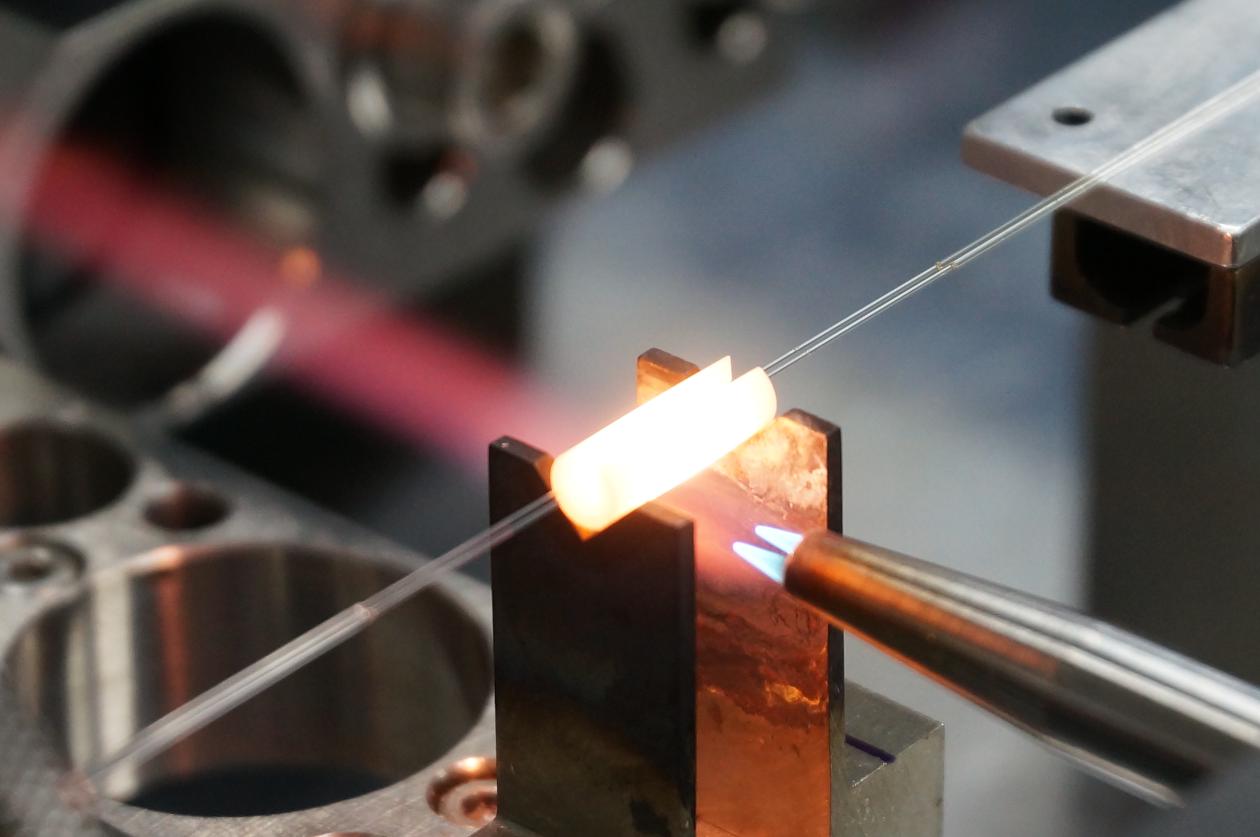
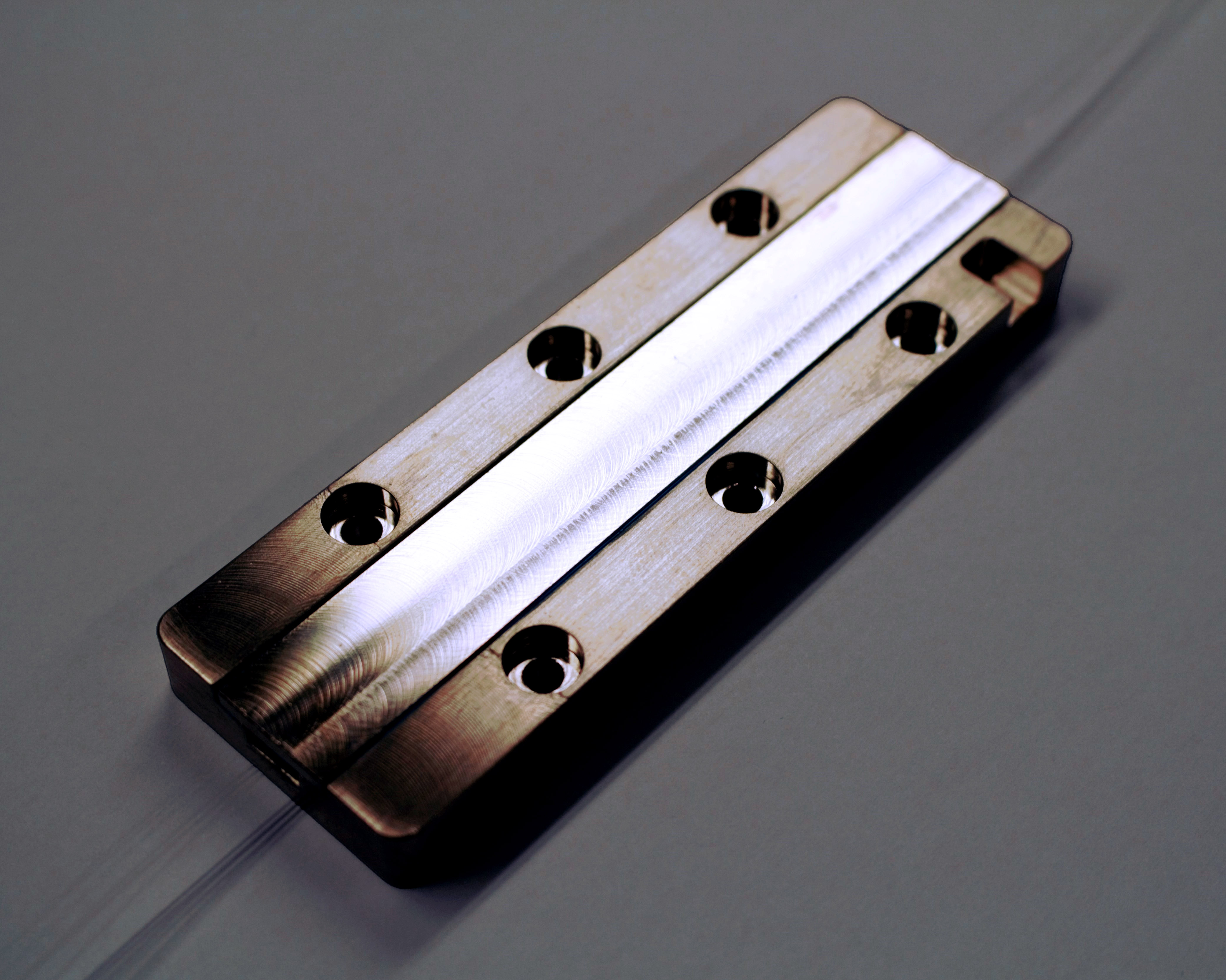
The LZH scientists utilized an innovative CO₂ laser-based processing technology developed and patented by LZH. With this technology, they selectively removed small areas of the outermost glass cladding of the triple-clad fibers, creating lateral access to the pump cladding. This technique enables pump diode fibers to be spliced laterally to the pump light cladding, i.e., the inner glass cladding, thereby providing the required pump energy for the laser process. Additionally, the researchers developed cladding mode strippers that efficiently remove unabsorbed pump light from the fiber system through CO₂ laser structuring of the triple-clad fiber.
High coupling efficiency at 475 watts input power
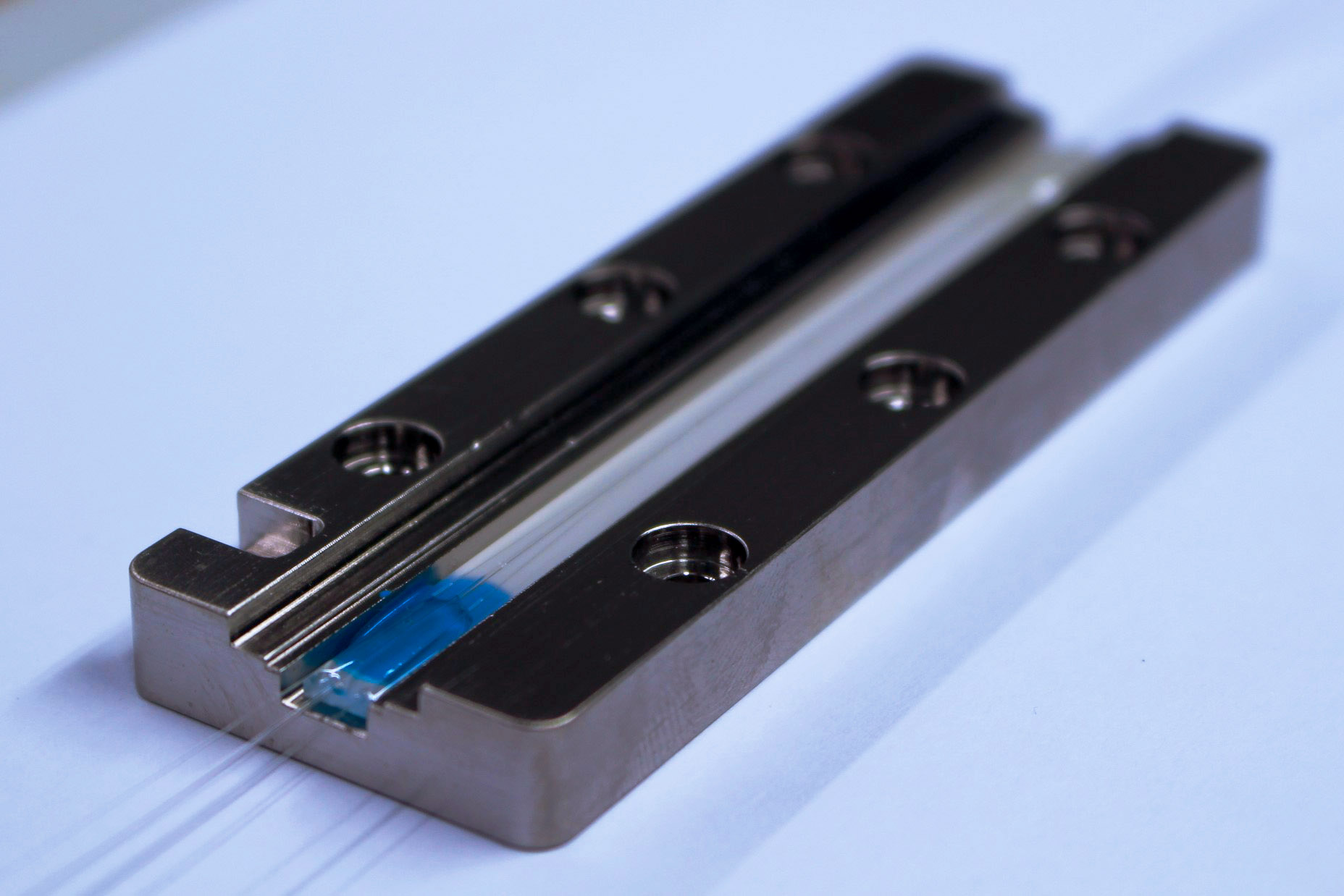
The developed signal-pump couplers achieved an average coupling efficiency of 90.1±2.5 percent at input powers up to 475 watts, with the available pump power being the limiting factor. This achieves an efficiency that corresponds to the state of the art for couplers with conventional fibers. For triple-clad fibers, as used here, this represents a significant new development. The low optical losses indicate that the component can also be operated at significantly higher powers, making it possible to reach the targeted 1 kW power class.
For the cladding mode strippers, the scientists achieved an outcoupling efficiency of more than 20 dB with a derived optical power of 250 watts. These components make the triple-clad fiber design usable for various laser and amplifier configurations and enable higher fiber integration as well as further power scaling in systems with demanding beam quality requirements.
The project "Development of high-performance QCW 2µm fiber lasers for medical and agricultural applications" (DECOMP) was funded under the EuroStars program with funding reference numbers E!234 and 01QE2206B.


Laser Zentrum Hannover e.V. (LZH)
As an independent, non-profit research institute, the Laser Zentrum Hannover e.V. (LZH) stands for innovative research, development, and consulting. Supported by the Lower Saxony Ministry of Economics, Transport and Building, the LZH is dedicated to selflessly promoting applied research in the field of photonics and laser technology. Founded in 1986, almost 200 employees are now working at the LZH.
The LZH offers solutions to current and future challenges with its smart photonics. Along the process chain, natural scientists and engineers work interdisciplinary together: from component development for specific laser systems or for quantum technologies to process developments for a wide variety of laser applications, for example for medical and agricultural technology or lightweight construction in the automotive sector. 18 successful spin-offs have emerged from the LZH to date. Thus, the LZH creates a strong transfer between fundamental science, application-oriented research, and industry - and uses light for innovation.