
Bio-based graphene foams for industrial applications
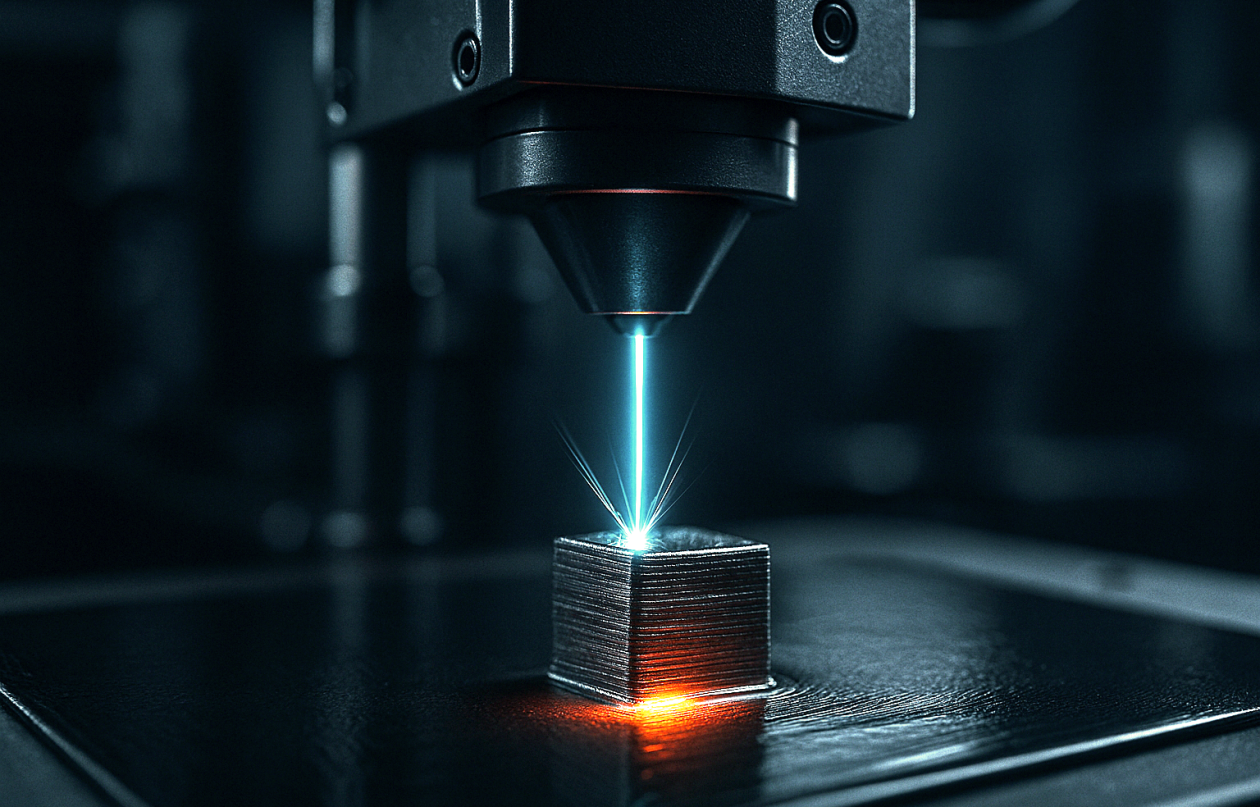
Sponge-like structures are nature's multi-talents: human bones, fungal spores, and cat paws use them for shock absorption, stabilization, or noise reduction. The partners from nine countries now want to manufacture such nature-inspired structures using a laser-based additive process. They use plant oil and nickel-coated metal powder as starting materials. Complex three-dimensional structures are to be created layer by layer. The researchers plan to extract the metal powder during manufacturing, resulting in the intended sponge-like 3D graphene structure. The powder should then be reusable.
From lab to application: developing the manufacturing process
Since this material is being used in Additive Manufacturing for the first time, developing the printing process is challenging: the paste made from coated metal particles and plant oil requires a specially developed feeding system. Additionally, the team will determine the optimal laser wavelength for precise material processing.
In parallel, partners are conducting life cycle assessments (LCA) and life cycle cost analyses (LCC). They are capturing CO₂ emissions, energy consumption, waste generation, and recycling potential. Their shared goal: integrate this technology into the European circular economy and transfer it to other industries.
About Bio.3DGREEN
With the Bio.3DGREEN project, the partners aim to demonstrate that additive manufacturing with graphene foams can be a high-performance and sustainable alternative for producing shock-absorbing, sound-reducing, and lightweight structures. The project is led by LZH in collaboration with Universidad Complutense de Madrid, Spain, Atomising Systems Limited, UK, University of Patras, Greece, Engitec Systems International Limited, Cyprus, Meab Chemie Technik Gmbh, Germany, DIN Deutsches Institut für Normung e.V., Germany, Ylisense Private Company Ike, Greece, Tenneco Automotive Europe Bvba, Belgium, Centro Ricerche Fiat Scpa, Italy, Prozero International Aps, Denmark, Stratagem Energy Ltd, Cyprus, Neuraltech Ike, Greece, and Alpes Lasers SA, Switzerland. The Bio.3DGREEN project is funded by the European Union under grant agreement 101174399. More information: www.bio3dgreen.eu

Laser Zentrum Hannover e.V. (LZH)
As an independent, non-profit research institute, the Laser Zentrum Hannover e.V. (LZH) stands for innovative research, development, and consulting. Supported by the Lower Saxony Ministry of Economics, Transport and Building, the LZH is dedicated to selflessly promoting applied research in the field of photonics and laser technology. Founded in 1986, almost 200 employees are now working at the LZH.
The LZH offers solutions to current and future challenges with its smart photonics. Along the process chain, natural scientists and engineers work interdisciplinary together: from component development for specific laser systems or for quantum technologies to process developments for a wide variety of laser applications, for example for medical and agricultural technology or lightweight construction in the automotive sector. 18 successful spin-offs have emerged from the LZH to date. Thus, the LZH creates a strong transfer between fundamental science, application-oriented research, and industry - and uses light for innovation.