
Research in practice: LZH at Formnext 2026
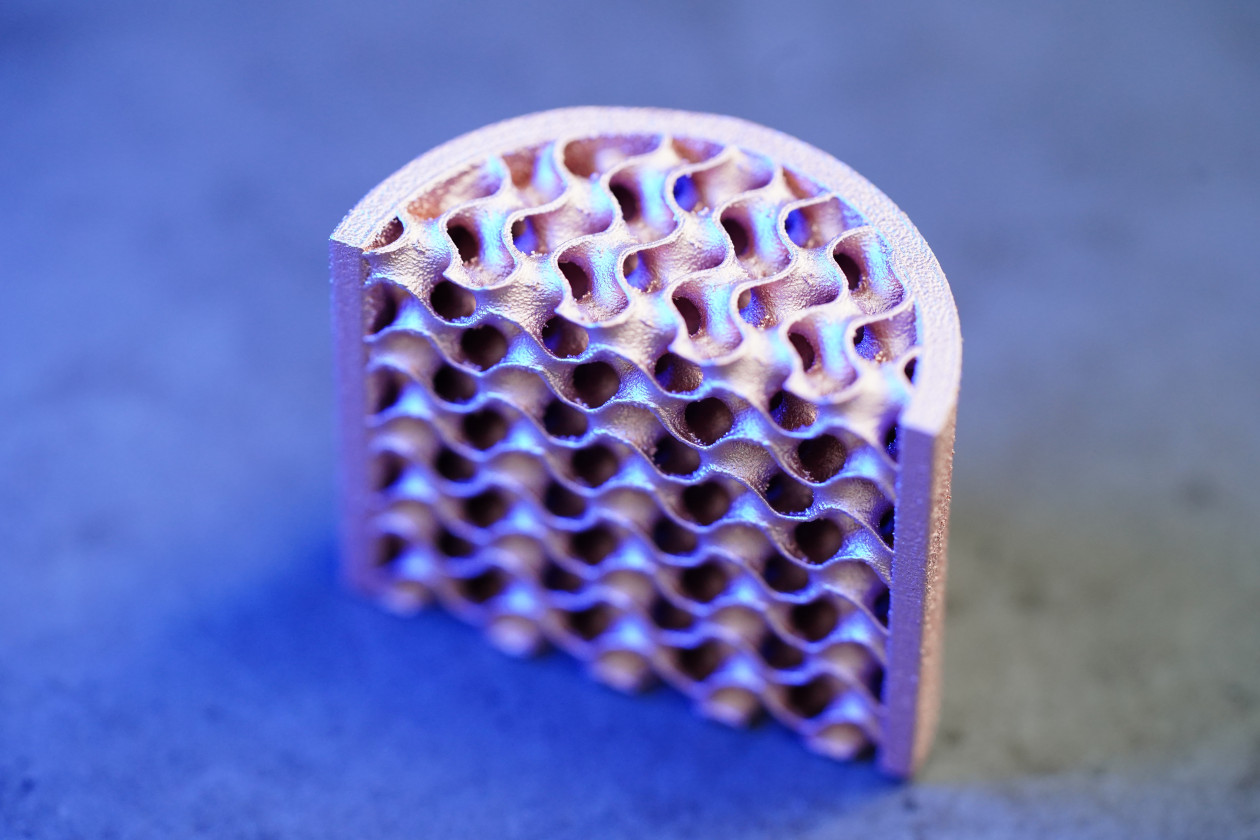
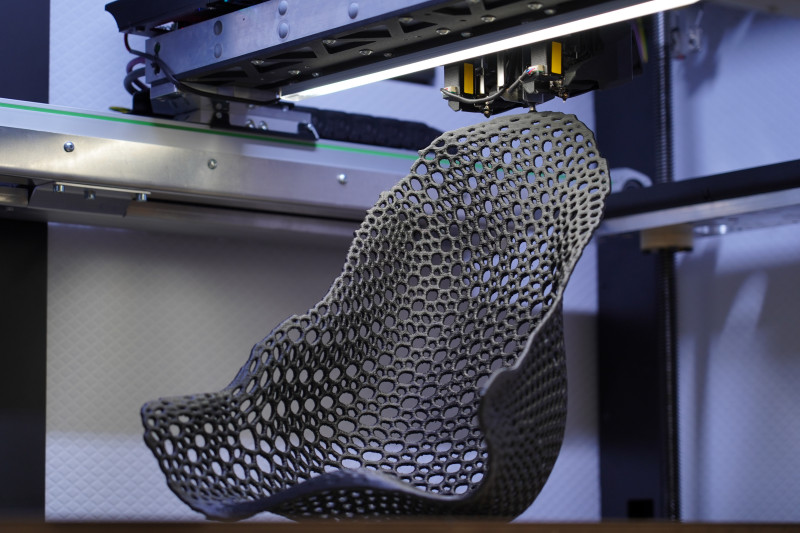
Additive manufacturing unlocks what conventional processes cannot deliver: complex geometries, integrated functions, and patient-specific solutions. At Formnext 2026, the LZH will demonstrate how these capabilities can be leveraged across a wide range of industries.
High-performance materials, new possibilities
The LZH develops laser-based manufacturing processes for demanding materials in close collaboration with industry - from feasibility studies to prototype production. Copper, for example, offers excellent thermal and electrical conductivity, but poses significant processing challenges in 3D printing due to its high reflectivity and thermal conductivity. The LZH is developing processes for the Additive Manufacturing of copper components, with potential applications in heat exchangers.
Equally promising – though equally challenging – is the Additive Manufacturing of magnesium alloys: lightweight and biocompatible, this material is of great interest for lightweight construction as well as medical implants. The LZH also works with novel steels specifically designed for 3D printing. These materials combine corrosion resistance with high hardness, enabling precision-tempered injection moulding tools with superior quality and extended service life.
Complex geometries for high-performance components
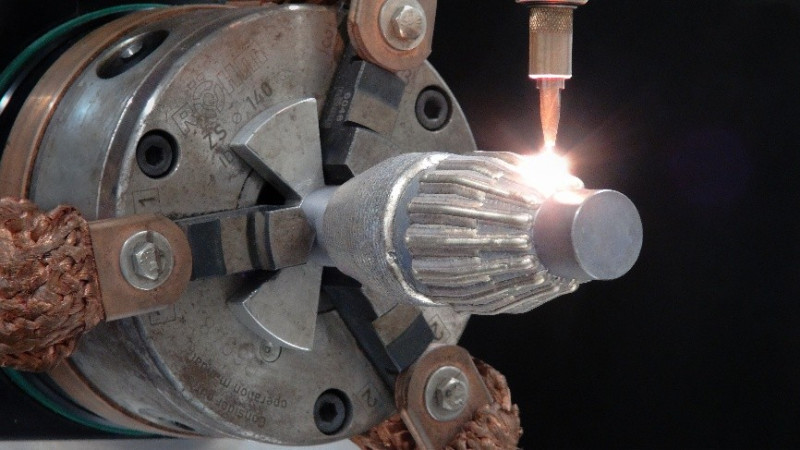
Beyond new materials, the LZH showcases advances in directed energy deposition (DED) using wire or powder. DED is particularly versatile: it enables both the additive manufacturing of large components and their repair. Using laser wire deposition, the LZH demonstrates reliable production of challenging geometries - exemplified by a complex impeller. A load-optimised gear wheel demonstrates how deposition welding delivers maximum performance with minimal material use.
Laser powder deposition offers significant potential for the energy, aerospace, and space sectors. A thin-walled combustion chamber with integrated, near-contour cooling channels exemplifies this potential. It demonstrates how complex high-performance components can be manufactured with optimised weight and efficiency.
From the lab to real-world application - including in medicine
In medical technology, 3D printing enables patient-specific solutions previously requiring labour-intensive manual fabrication. On display at Formnext: a custom-fitted seating orthosis made from plastic, demonstrating the efficiency gains of Additive Manufacturing.
Partnership and expertise on site
The LZH offers companies comprehensive support in the development of new manufacturing technologies. In addition to the processing of metals, polymers and glass, visitors will also have the opportunity to learn about collaboration projects and potential funding opportunities.


Laser Zentrum Hannover e.V. (LZH)
As an independent, non-profit research institute, the Laser Zentrum Hannover e.V. (LZH) stands for innovative research, development, and consulting. Supported by the Lower Saxony Ministry of Economics, Transport and Building, the LZH is dedicated to selflessly promoting applied research in the field of photonics and laser technology. Founded in 1986, almost 200 employees are now working at the LZH.
The LZH offers solutions to current and future challenges with its smart photonics. Along the process chain, natural scientists and engineers work interdisciplinary together: from component development for specific laser systems or for quantum technologies to process developments for a wide variety of laser applications, for example for medical and agricultural technology or lightweight construction in the automotive sector. 18 successful spin-offs have emerged from the LZH to date. Thus, the LZH creates a strong transfer between fundamental science, application-oriented research, and industry - and uses light for innovation.