Surface Functionalization with AI and Laser
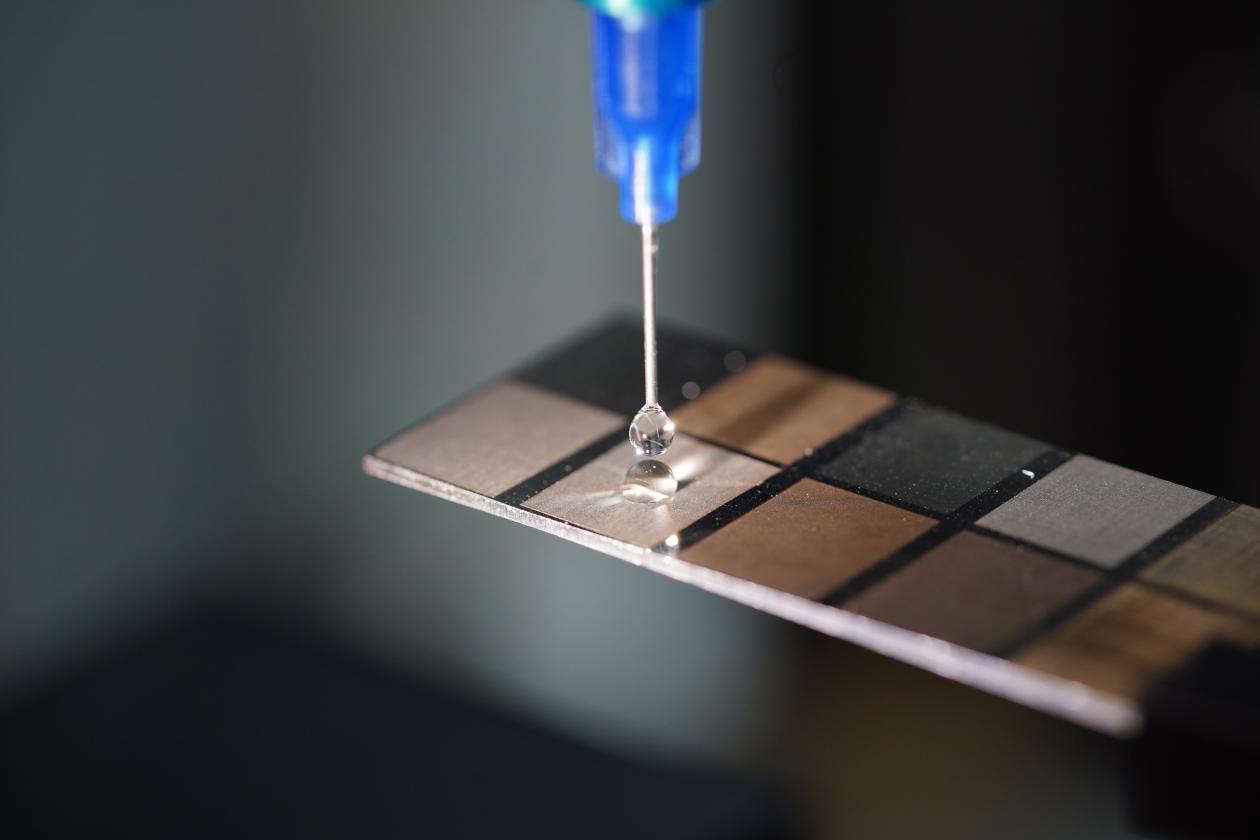
The way in which water wets a surface is a decisive factor in the success of many applications. Cell cultures, for example, require different wetting properties than electrodes used in hydrogen production. To date, these properties have been adapted for specific applications and applied to surfaces primarily based on empirical knowledge.
Robot-Assisted Platform with Laser and AI
In the new project KI-Surf, LZH is working together with ATMINA Solutions GmbH and KLUG Laserdienstleistungen und Beratung to translate this approach into a data-driven methodology. To this end, a robot-assisted platform is being developed that integrates laser structuring, contact angle measurement, surface topography analysis, and sample storage. The data generated will reveal correlations between laser parameters, surface structure, and wettability - enabling targeted surface functionalization in the future without requiring prior knowledge of the necessary topography or suitable laser parameters.
Temporal changes in wettability can also be accounted for. Using the robotic system, the platform can automatically store samples and subject them to repeated analysis over defined time periods. These long-term data are subsequently incorporated into the AI-assisted optimization process as well.
Validation Using Cell Culture and Electrolysis Components
The approach will initially be validated in two application areas: First, in cell culture technology, the aim is to investigate how laser-functionalized surfaces influence cell adhesion and cell growth. Second, components used in water electrolysis - such as flow plates or porous transport layers - will be functionalized to improve electrolysis efficiency.
The outcomes of KI-Surf are intended to contribute to an ecologically sustainable, chemistry-free approach to surface functionalization with broad applicability across materials science, biotechnology, and energy technology.
About KI-Surf
The project "Robot-Assisted AI Laser Processes for Surface Functionalization (KI-Surf)" is funded by the Investitions- und Förderbank Niedersachsen (NBank) using resources from the European Regional Development Fund. Project partners are ATMINA Solutions GmbH, KLUG Laserdienstleistungen und Beratung und Laser Zentrum Hannover e.V.