
New fiber laser for more precise wind measurement
Conventional wind measurement devices such as anemometers and wind vanes capture wind conditions at their own location. To measure wind at a distance from the installation site, wind LiDAR systems are used. These emit laser light that is reflected by aerosols in the atmosphere, causing a shift in the light frequency. The reflected signals from multiple laser beams are then measured, allowing both wind speed and wind direction to be reconstructed computationally. Such systems are suitable for ground-based measurements using upward-directed beams to survey wind fields, as well as for tower-mounted measurements using horizontally directed beams. The key challenge for LiDAR systems used in these applications is to meet the application-specific requirements for range, accuracy, and robustness as effectively as possible.
Higher-performance fiber laser for increased data output
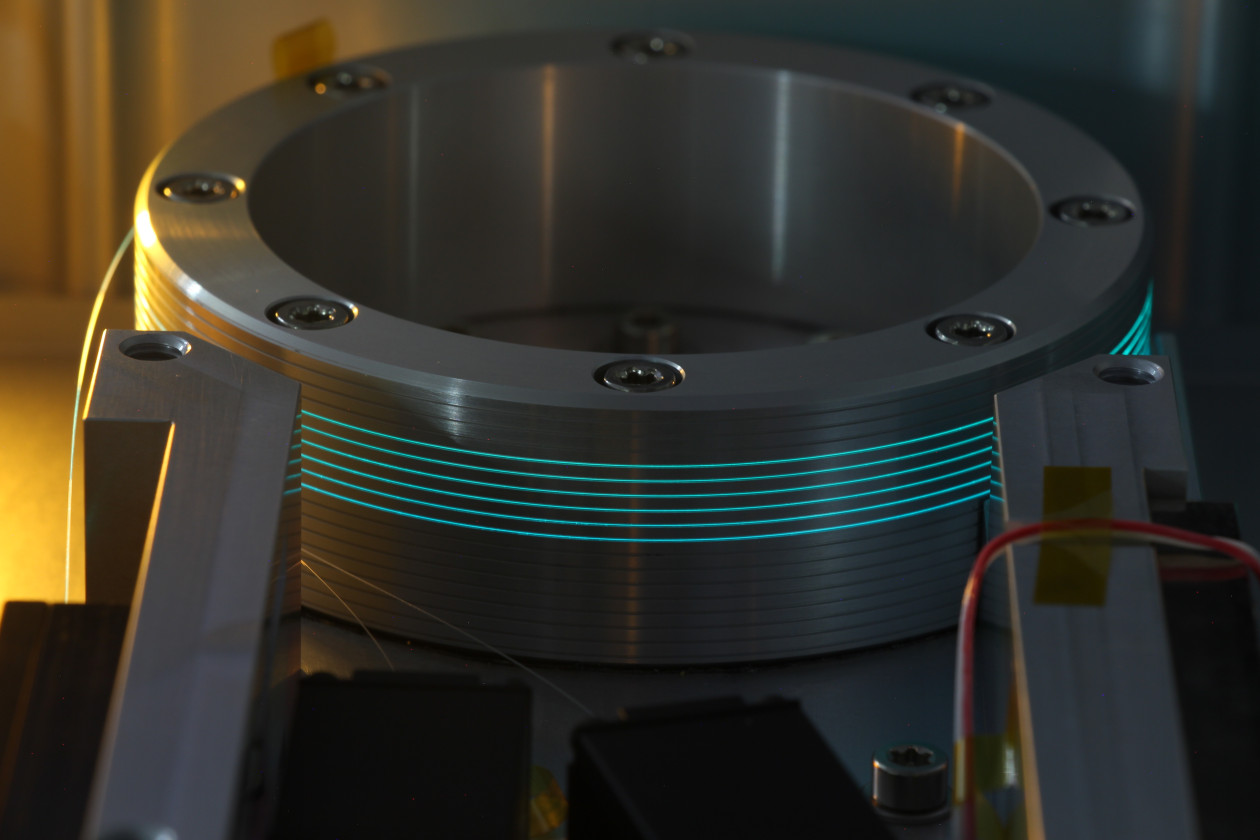
In the VeLiS project, the two partners aim to develop and implement a new, robust, and cost-effective system. At LZH, researchers are developing a fiber-based laser module. A central objective is to achieve a comparatively high pulse repetition rate of at least 30 kilohertz to deliver the highest possible data rate. At the same time, the pulse energy is targeted at around 100 microjoules, with an average output power of at least 3 watts. Laser modules currently available on the market offer significantly lower pulse energies at comparable repetition rates. This kind of system would enable large amounts of data to be collected within very short measurement windows while also achieving long-range measurements. Other requirements include a compact, energy-efficient design and the least possible weight. The laser module must also be robust against vibration and environmental influences and operate reliably with minimal maintenance.
Thies Clima will be responsible for developing the necessary electronics, the evaluation algorithms, and the overall LiDAR system within the project.
Goal: Universal technology building blocks for a broad range of applications
The aim of the project is to develop universally deployable technology building blocks for wind LiDAR systems. The wide range of potential applications includes wind measurement along flight corridors, long-term wind data acquisition at selected sites, and predictive wind gust detection in the vicinity of energy infrastructure.
The Versatile LiDAR System (VeLiS) project is funded by the Investitions- und Förderbank Niedersachsen – NBank using resources from the European Regional Development Fund. Project partners are Thies Clima and Laser Zentrum Hannover e.V.