
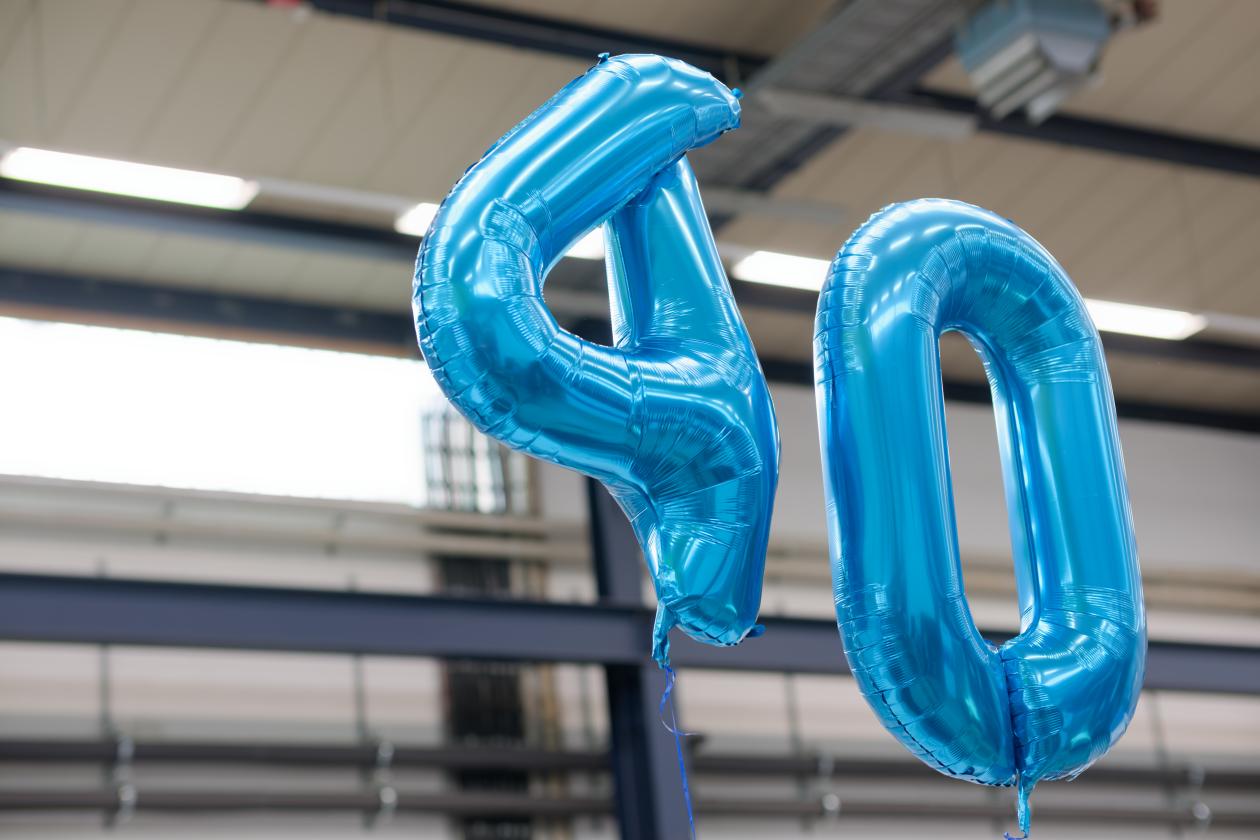
40 years Laser Zentrum Hannover e.V.
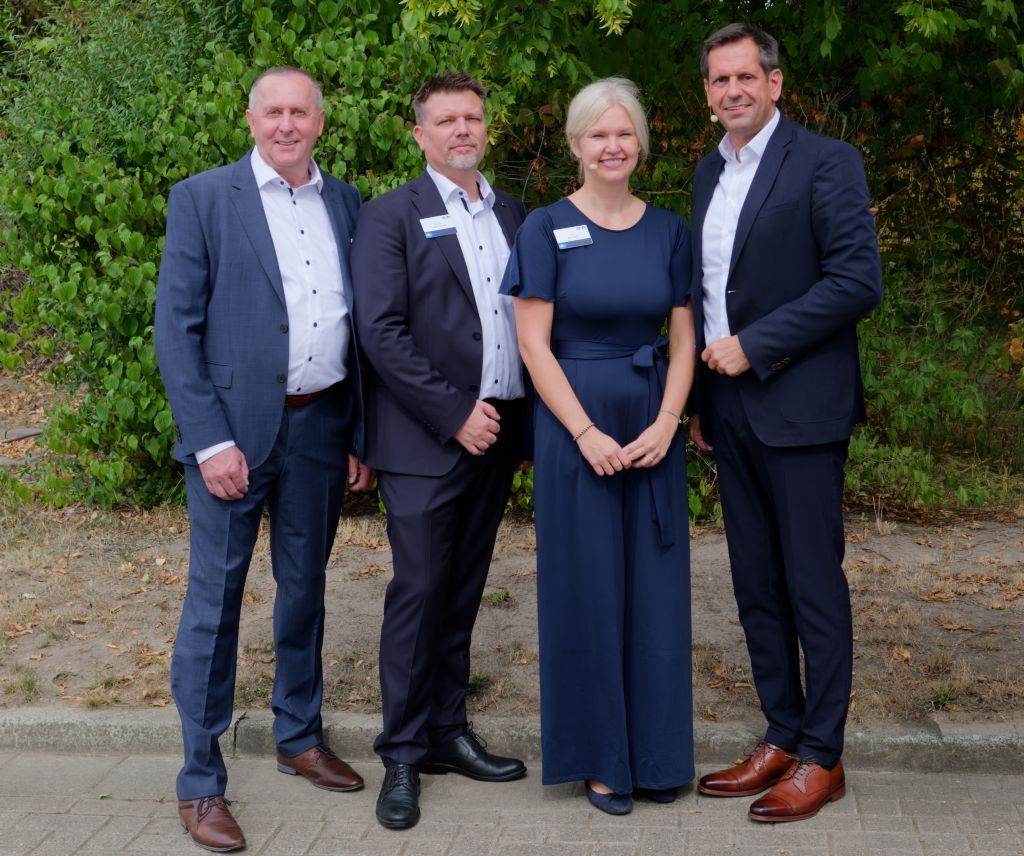
"The LZH is a 40-year success story, and we intend to keep writing it. This research institute brings together science and industry in a truly unique way. These are exactly the kinds of structures we need to drive industry forward," said Lower Saxony's Minister-President Olaf Lies, underscoring the institute's importance to the region. "The LZH has earned an outstanding international reputation."
"The LZH is a 40-year success story"
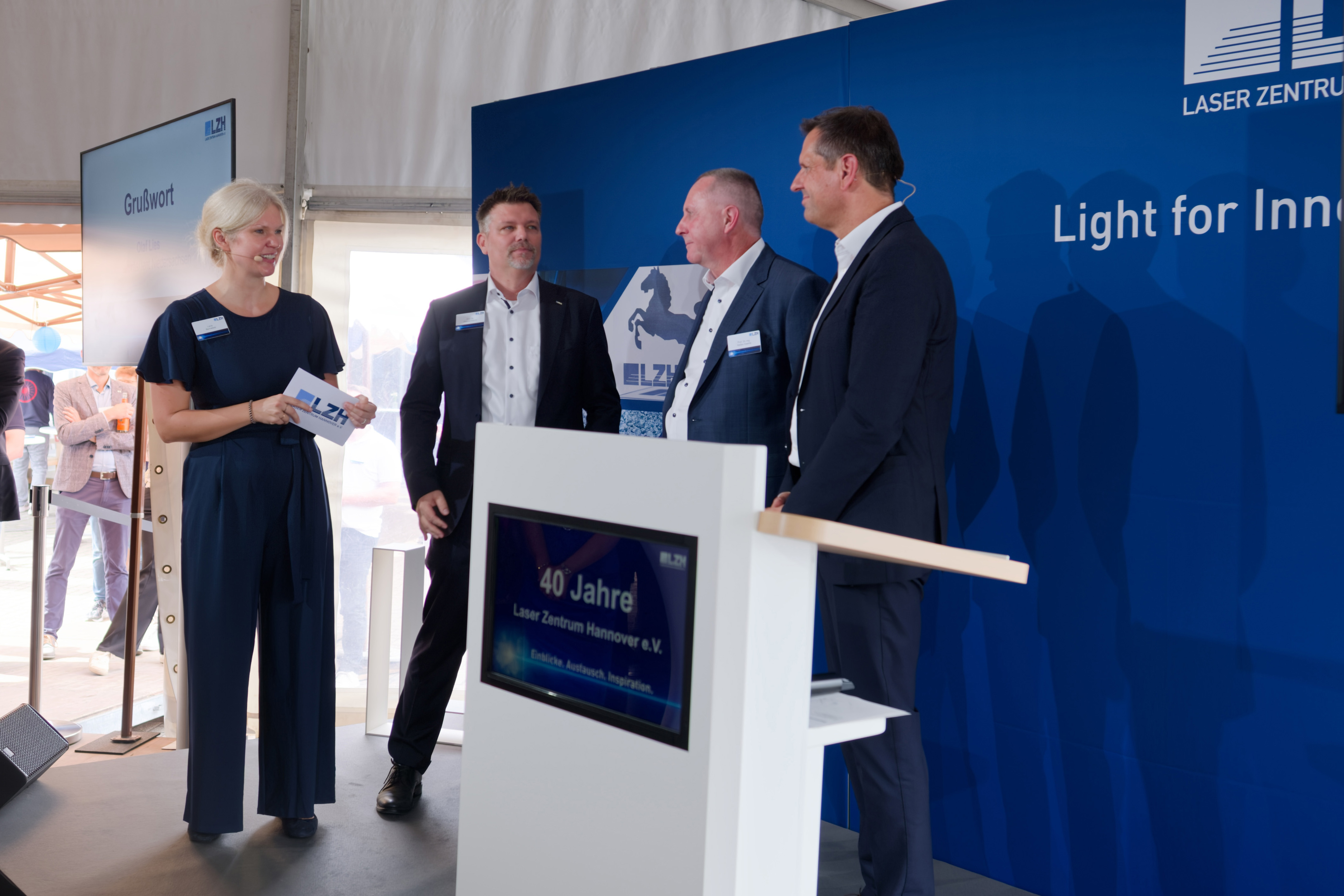
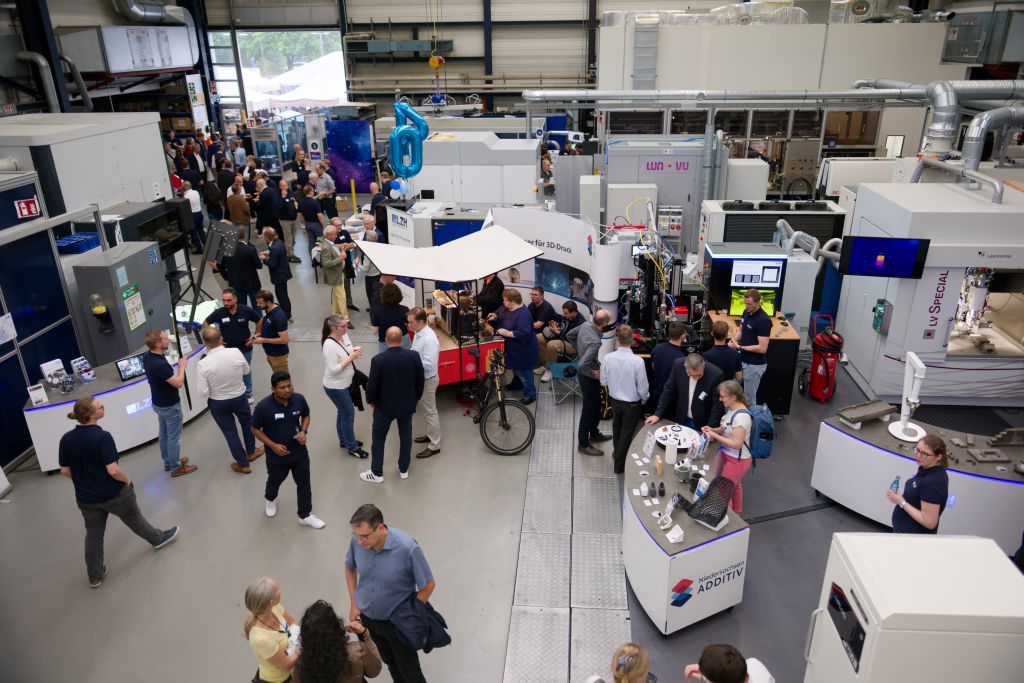
The anniversary celebrations were defined by exchange and insight. Lower Saxony's Minister-President Olaf Lies opened the event together with the LZH's Executive Board Lena Bennefeld, Prof. Dr. Dietmar Kracht and Prof. Dr.-Ing. Stefan Kaierle. LZH staff then presented their current research at 19 stations, the scope of which was as diverse as the institute's research portfolio. Topics covered included optics manufacturing for fusion research and laser development for space applications, lasers in production and security research, underwater laser systems, as well as agricultural applications.
"40 years of LZH means 40 years of dedicated promotion of applied research in the field of laser technology. The foundation for fulfilling this mission - as set out in our statutes - is close collaboration with both the scientific community and industry," said Prof. Dr. Dietmar Kracht, Chair of the LZH Executive Board. He continued: "We thank our funding bodies and partners for the trust they have placed in us and for the ongoing exchange that makes our work possible in the first place. Special thanks go to Olaf Lies for his long-standing support, and to the State of Lower Saxony, above all the Lower Saxony’s Ministry of Economic Affairs for their funding from day one."
Four decades - and 18 successful spin-offs
Since its founding in 1986, the LZH has grown into one of Europe's leading research institutes for laser technology. Around 200 employees today conduct research spanning component development for laser systems and quantum technologies through to applications in medical technology, agricultural engineering and lightweight construction in the automotive sector. To date, 18 companies have been successfully spun off from the institute.


Laser Zentrum Hannover e.V. (LZH)
As an independent, non-profit research institute, the Laser Zentrum Hannover e.V. (LZH) stands for innovative research, development, and consulting. Supported by the Lower Saxony Ministry of Economics, Transport and Building, the LZH is dedicated to selflessly promoting applied research in the field of photonics and laser technology. Founded in 1986, almost 200 employees are now working at the LZH.
The LZH offers solutions to current and future challenges with its smart photonics. Along the process chain, natural scientists and engineers work interdisciplinary together: from component development for specific laser systems or for quantum technologies to process developments for a wide variety of laser applications, for example for medical and agricultural technology or lightweight construction in the automotive sector. 18 successful spin-offs have emerged from the LZH to date. Thus, the LZH creates a strong transfer between fundamental science, application-oriented research, and industry - and uses light for innovation.