
Laser-based bird protection for glass facades
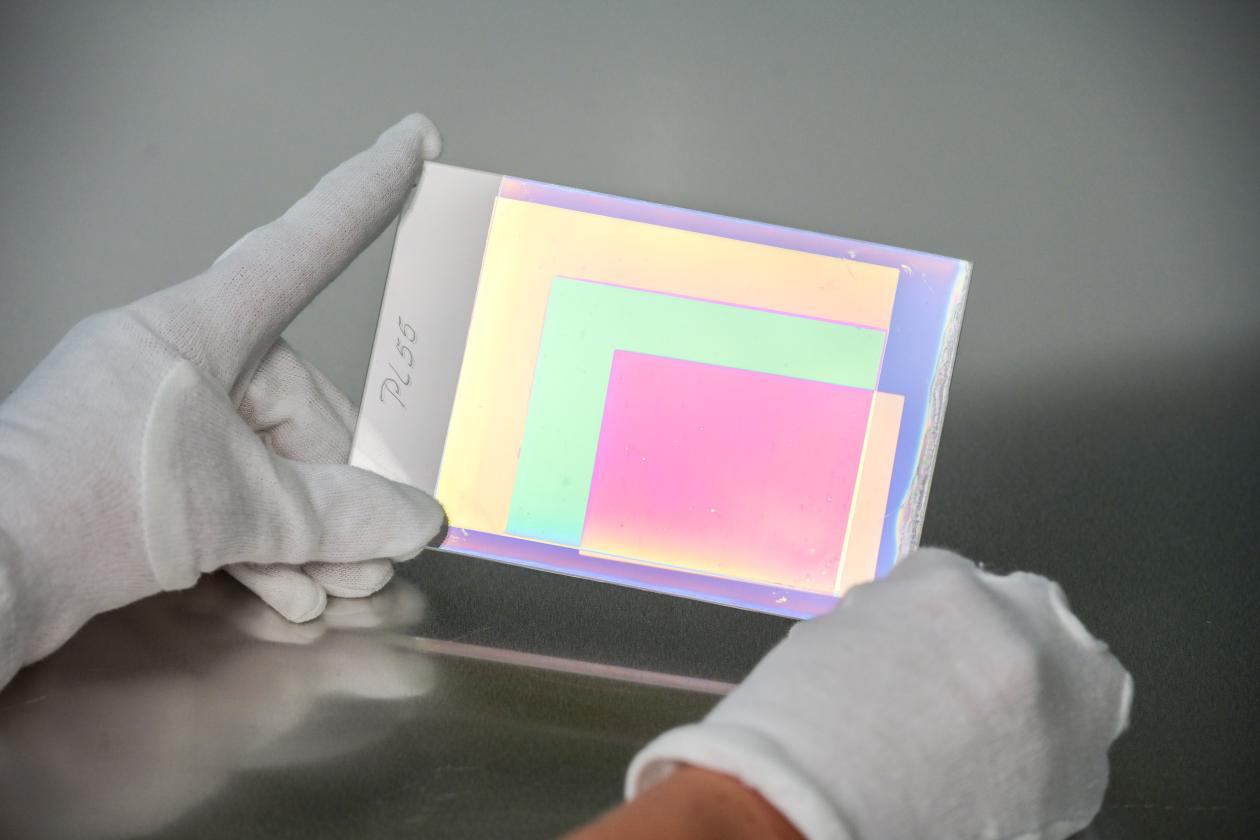
Modern glass facades define the appearance of many cities. For birds, however, they represent an invisible hazard: according to NABU, 100 million birds die each year in Germany alone as a result of collisions with glass surfaces. Existing protective measures come with ecological drawbacks: chemical methods such as adhesive films and solvent-based prints release volatile organic compounds. Thermal methods such as fired-in markings consume large amounts of energy, since the entire glass element must be heated, and cause damage to the glass. LZH is now working on an alternative, with advisory support from isophon glas GmbH.
Laser meets sol-gel: a new approach to bird-protection markings
The two partners are developing a laser-based coating process built on what is known as sol-gel technology. In this process, a thin layer of water- or alcohol-based precursor materials is applied to the glass by spraying or coating. A laser then selectively densifies the coating at the desired location. Because only specific areas are treated with the laser, energy consumption is significantly lower compared to full-surface fired-in markings. The process also largely eliminates the need for harmful solvents.
The coating can be chemically tailored to make it visible to birds while still blending harmoniously into the architectural context. This is possible because the optical properties of sol-gel layers — including transmission, reflectance, and UV resistance — can be precisely tuned. For birds, which can perceive ultraviolet light, such markings are clearly detectable, while remaining virtually invisible to the human eye.
Reuse instead of disposal
Another key component of the project is the development of a laser-based de-coating process. This will enable the applied protective layer to be selectively removed without causing any damage to the glass. This opens up two possibilities: the glass can either be recoated or fed directly into the recycling stream. This approach extends the service life of facade glass and conserves resources — a contribution to the circular economy in the construction sector.
About MiVoLa
The project "Minimierung des Vogelanpralls an Glasfassaden durch Laser gehärtete Sol-Gel Markierungen und Laser basierte Markierungsentfernung zur Rückführung in den Wertstoffkreislauf (MiVoLa)" is funded by the Investitions- und Förderbank Niedersachsen – NBank within the framework of the European Regional Development Fund.