
Laser meets arc: hybrid welding process for thick duplex steels
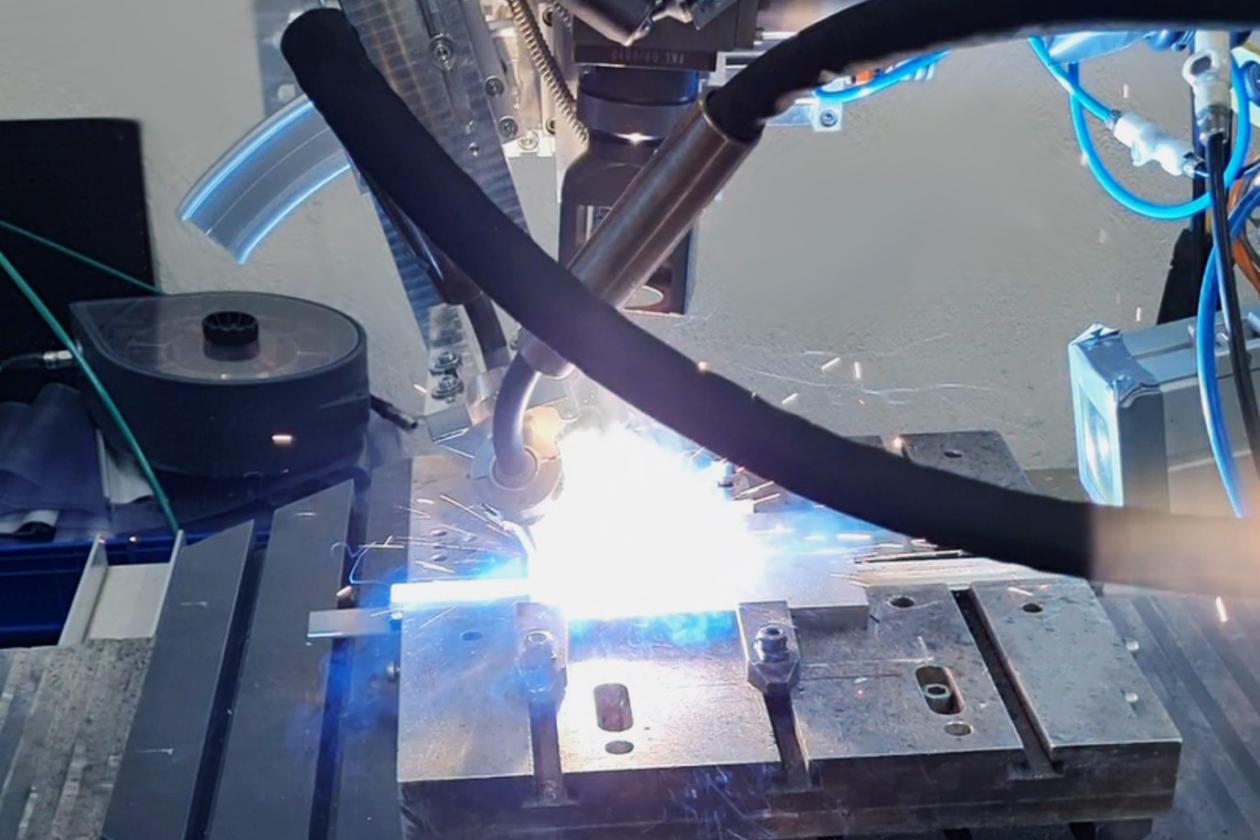
Duplex steels combine the advantages of two microstructural components, making them particularly high-performance materials. Their balanced mixture of delta ferrite and austenite provides corrosion resistance and mechanical strength. However, during welding, this ratio can be compromised by unfavorable heat input. While conventional arc welding processes produce high-quality welds, they operate slowly. Pure beam welding processes, on the other hand, are faster but do not deliver the required weld quality.
Two heat sources, one process
In the LaHDusch project, LZH is therefore combining a laser beam with a non-transferred arc and pulsed wire feeding. The arc burns between two wires and fills the weld at high deposition rates with low heat input. An additional pulsed consumable wire ensures higher weld quality. Beyond the welding process itself, the partners are also developing industrial-grade system and process technology for this method. Project partner MERKLE Schweißanlagen-Technik GmbH is developing the innovative arc welding technology.
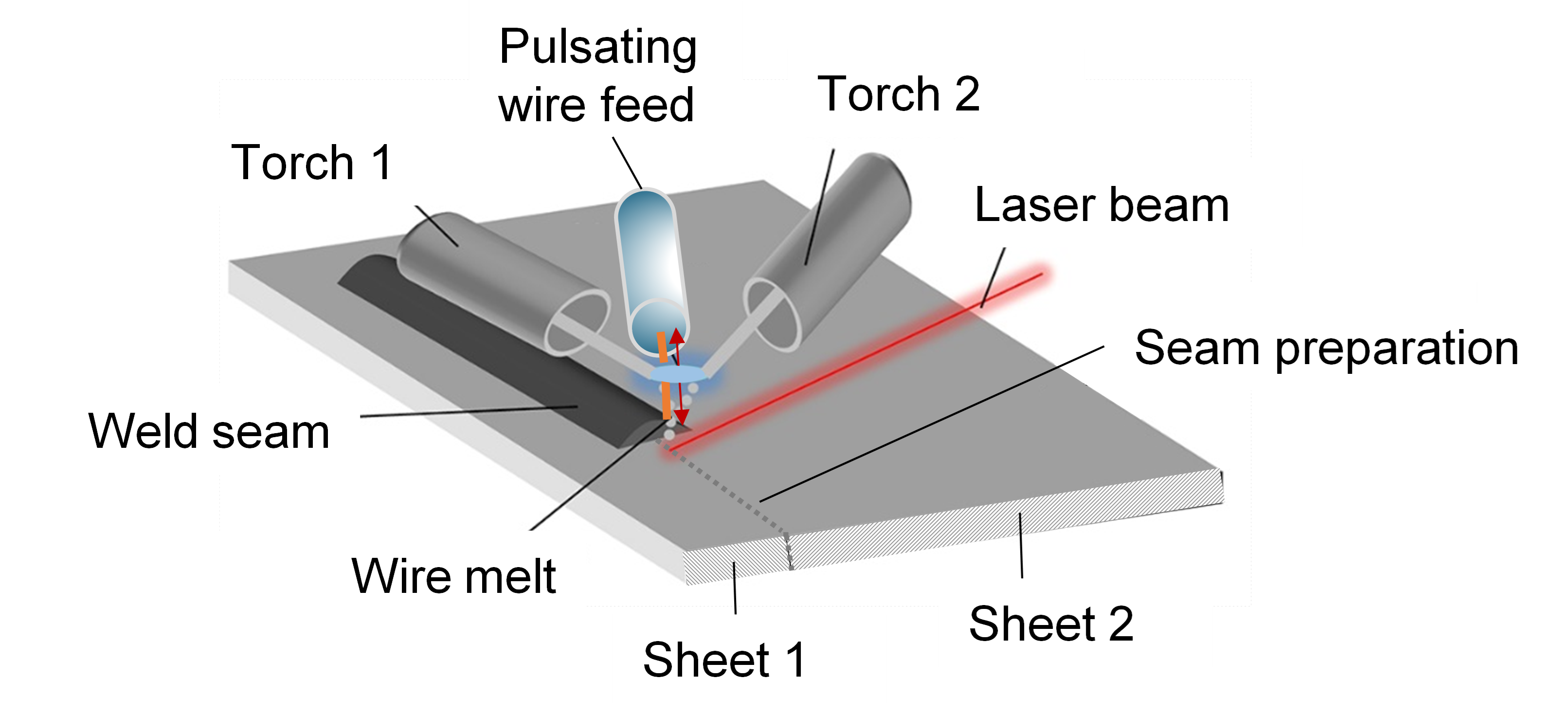
This process aims to bridge the existing gap between quality and productivity in duplex steel welding. Small and medium-sized enterprises in particular would benefit from this fast yet high-quality welding process.
The subproject "Process development for laser beam hybrid welding with non-transferred arc and melt-stimulating wire feeding" (LaHDusch) is funded under the "Central Innovation Program for SMEs (ZIM)" with funds from the Federal Ministry for Economic Affairs and Energy (funding code: KK5111725SY4).