
Laser-based defusing of munitions underwater
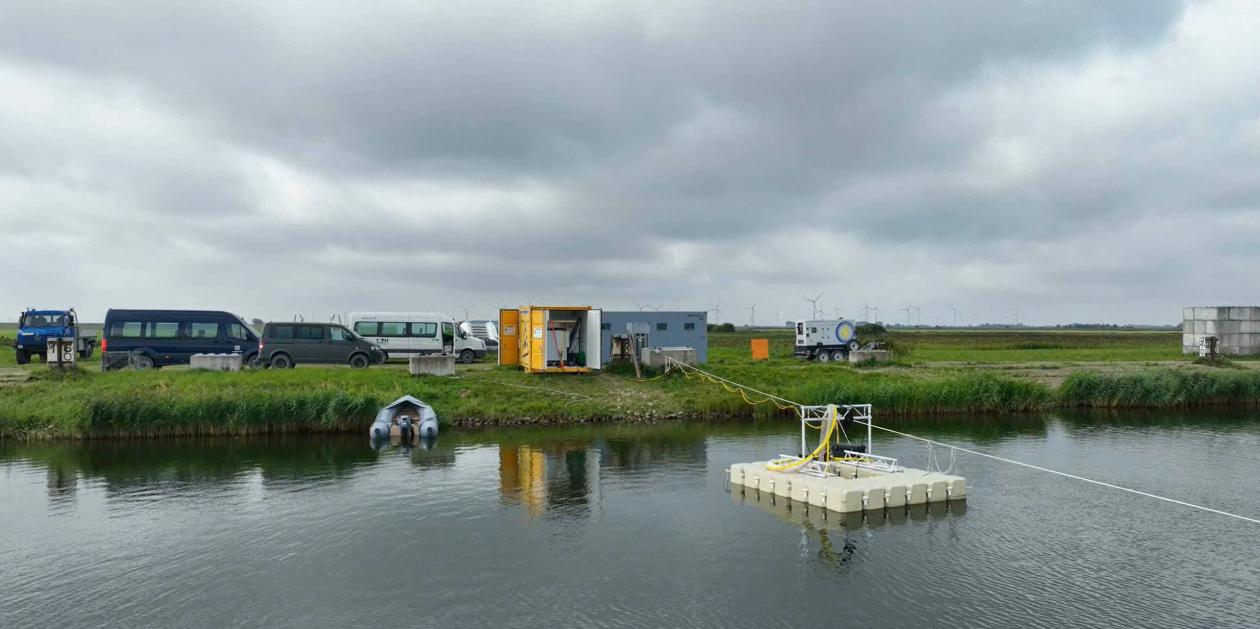
LZH has developed a laser-based process that can defuse non-transportable, primed munitions underwater more safely. This approach aims to protect marine life and the environment while eliminating the need for costly protective measures.
Previously used defusing methods such as controlled explosions, known as high-order detonations, can damage the hearing of marine life, including harbor porpoises, and therefore require environmental protection measures. These include bubble curtains that dampen underwater sound and the relocation of animals from danger zones.
Notching and controlled burn-out instead of detonation
The process developed by LZH in the UnLowDet project is based on a two-stage approach: First, researchers make a notch in the munition's casing using laser radiation, leaving one-third of the wall thickness intact. Then they penetrate the remaining material, also using laser radiation, triggering a deflagration – a very rapid combustion process, also called "low-order conversion." The resulting overpressure leads to controlled rupture of the casing and prevents high-order detonation and its associated shock wave. This method is designed to significantly reduce noise pollution and damage to the marine environment.
Promising test results with recovered munitions
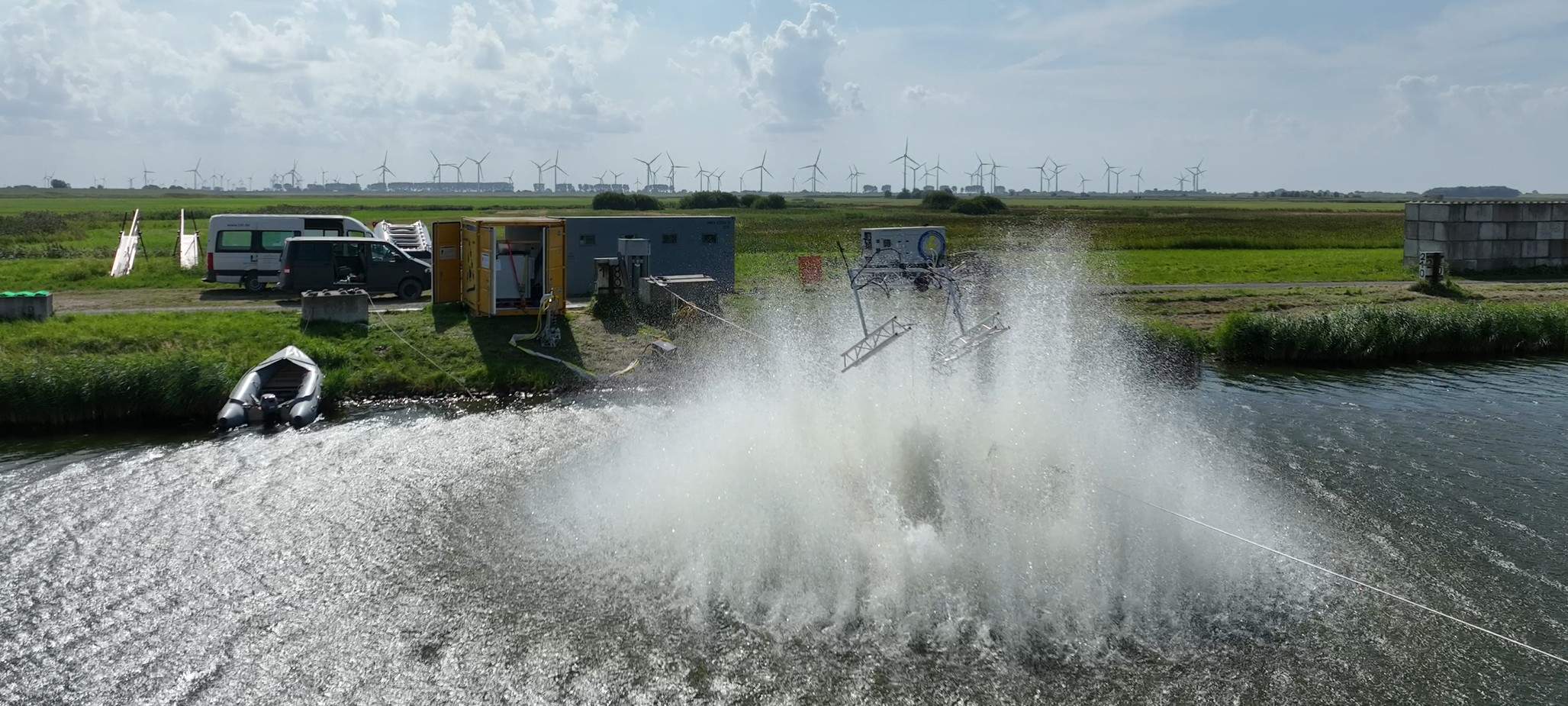
LZH conducted final tests together with project partner LASER on demand GmbH at the explosive testing lake of the Defense Technology Service Center 71 in Elpersbüttel. The researchers successfully validated the laser-based method: they triggered a controlled low-order conversion underwater – the casing ruptured and most of the explosive material remained intact instead of detonating. The process was tested on explosive devices containing 200 g of TNT, recovered munitions from World War II (provided by the Explosive Ordnance Disposal Service of Schleswig-Holstein), and mortar shells from the German Armed Forces.
Critical for safety: The dangerous transition from deflagration to high-order detonation did not occur. The process enabled controlled low-order conversions of varying intensity – the munitions casings either cracked partially or broke open completely.
Sound measurements allowed the partners to demonstrate the environmental benefits: the laser-based process significantly reduced underwater noise. The researchers now aim to deepen their understanding of ignition behavior and casing rupture in follow-up projects and transfer the process to other types of ordnance. The goal is to further optimize the process so it can be rapidly deployed in practical applications. In the long term, this should reduce the burden on marine ecosystems while eliminating the need for expensive technology such as bubble curtains.
About UnLowDet
In the UnLowDet project, partners developed a process for laser-induced, efficient defusing of ordnance at sea. Participants included Laser Zentrum Hannover e.V. (LZH), EGGERS Kampfmittelbergung GmbH, and LASER on demand GmbH. Associated partners that provided project consultation include Hamburg Fire Department, the State Office for Geoinformation and Surveying of Lower Saxony, Bremen Police, the State Criminal Police Office of Schleswig-Holstein, the State Office for Central Tasks and Technology of the Police, GEOMAR Helmholtz Centre for Ocean Research Kiel, and the Lower Saxony Ministry for the Environment, Energy, Construction and Climate Protection.
The collaborative research project was funded by the Federal Ministry for Economic Affairs and Energy under funding code 03SX550B through Project Management Jülich. The project partners thank the "Wehrtechnische Dienststelle für Schiffe und Marinewaffen, Maritime Technologie und Forschung (WTD 71)" for their support during the demonstration trials.


Laser Zentrum Hannover e.V. (LZH)
As an independent, non-profit research institute, the Laser Zentrum Hannover e.V. (LZH) stands for innovative research, development, and consulting. Supported by the Lower Saxony Ministry of Economics, Transport and Building, the LZH is dedicated to selflessly promoting applied research in the field of photonics and laser technology. Founded in 1986, almost 200 employees are now working at the LZH.
The LZH offers solutions to current and future challenges with its smart photonics. Along the process chain, natural scientists and engineers work interdisciplinary together: from component development for specific laser systems or for quantum technologies to process developments for a wide variety of laser applications, for example for medical and agricultural technology or lightweight construction in the automotive sector. 18 successful spin-offs have emerged from the LZH to date. Thus, the LZH creates a strong transfer between fundamental science, application-oriented research, and industry - and uses light for innovation.